
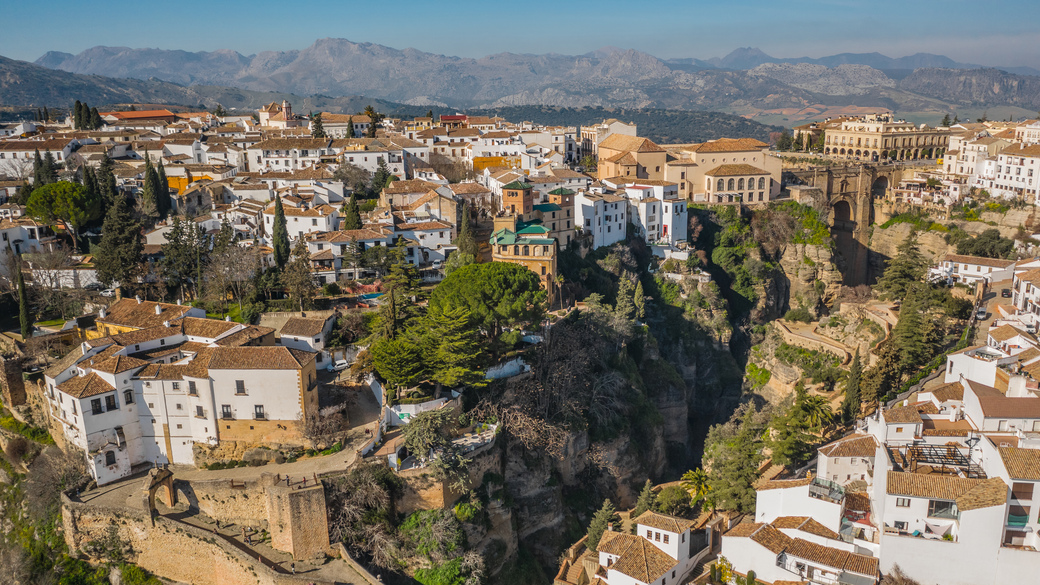
Choosing the best things to see in Ronda is not always easy. The town brings together history, architecture and nature within a relatively compact area, shaped by the dramatic El Tajo gorge and centuries of cultural heritage.
Puente Nuevo may be its most recognisable landmark, but Ronda deserves a broader look. Palaces, gardens, Moorish remains, old city walls and quieter streets reveal a much richer side of the town.
These are ten of the most essential places to visit in Ronda if you want to experience the town beyond its most photographed view.
1. Puente Nuevo and El Tajo Gorge
Puente Nuevo is the great symbol of Ronda. The bridge connects both sides of the town across the deep gorge carved by the Guadalevín River and creates one of the most distinctive views in Andalusia.
It is worth seeing from several different perspectives. The nearby viewpoints offer impressive views from above, while the paths descending towards the gorge reveal the scale of the bridge and the surrounding rock formations.
2. Alameda del Tajo
Close to the centre, Alameda del Tajo is a peaceful tree-lined garden ending in several balconies overlooking the Serranía de Ronda.
It is especially pleasant early in the morning or towards sunset. The views help explain how Ronda sits on a high plateau surrounded by mountains, open countryside and valleys.
3. Plaza de Toros of the Real Maestranza
Ronda’s Plaza de Toros forms part of the town’s historic heritage and has played an important role in the history of Spanish bullfighting.
Beyond its original purpose, the building is notable for its architecture and connection with Ronda’s past. It stands beside Alameda del Tajo, making it easy to combine both stops during the same walk.
4. Ronda’s historic old town
After crossing Puente Nuevo, you enter the historic part of Ronda. Calle Armiñán leads through traditional houses, churches, small squares and former palaces towards some of the town’s most interesting heritage sites.
This is also a good place to leave the main route for a while. Part of Ronda’s character is found in its side streets, quiet courtyards, stone doorways and unexpected views across the surrounding landscape.
5. Palacio de Mondragón
Palacio de Mondragón is home to Ronda’s Municipal Museum. The building contains architectural elements from different periods of local history, as well as attractive courtyards and gardens.
Its location within the old town makes it a natural stop before continuing towards Plaza Duquesa de Parcent.
6. Santa María la Mayor and Plaza Duquesa de Parcent
Plaza Duquesa de Parcent is one of the most peaceful monumental spaces in the historic centre. Here you will find the Church of Santa María la Mayor, built on the site once occupied by the town’s main mosque.
The square is surrounded by historic buildings and small gardens, creating a pleasant place to pause before continuing towards the old city walls.
7. Puerta de Almocábar and the old city walls
Puerta de Almocábar was one of the main entrances to the former walled city and still gives a clear sense of the defensive importance of this part of Ronda.
Beyond the gate lies the San Francisco neighbourhood, where the atmosphere becomes quieter and local restaurants and smaller streets replace the busier areas around Puente Nuevo.
8. Arab Baths of Ronda
The Arab Baths are one of the key places for understanding Ronda’s Moorish past. They are located in what was once the entrance area to the medina, close to Puente Viejo.
The complex preserves several rooms connected with the traditional bathing ritual and remains one of the most interesting cultural visits in the town.
9. Puente Viejo and Jardines de Cuenca
From the Arab Baths, continue towards Puente Viejo and then climb towards Jardines de Cuenca.
These terraced gardens overlook El Tajo and provide different perspectives of the gorge, Casa del Rey Moro and the historic buildings rising above the rock.
10. Casa del Rey Moro
Casa del Rey Moro is particularly known for its gardens and the Water Mine, a structure carved into the rock that descends towards the bottom of the gorge.
The visit involves a large number of steps, so it is worth taking this into account before starting the descent. The site offers another perspective on the historic relationship between Ronda and El Tajo.
How to plan your visit to Ronda
Most of these places can be reached comfortably on foot. If you have limited time, follow our one-day itinerary in Ronda, designed to connect the main landmarks in a practical walking route.
If you are staying longer, divide the visits across several days and leave time for local food, viewpoints and the surrounding countryside. Monument opening hours may change throughout the year, so check the latest information on the official Ronda tourism website before your visit.
Discover Ronda at a slower pace
Some of the best moments begin when the list of monuments ends. Walking through the old town at sunset, sitting beside a viewpoint or watching the light change across the Serranía reveals a quieter side of Ronda.
From Amaranta Boutique Hotel, in central Ronda, you can walk to Alameda del Tajo, the Plaza de Toros and many of the town’s main attractions. Its location makes it easy to explore during the day and return to a calm, carefully designed space afterwards.
Because choosing the best things to see in Ronda is only the beginning. The town is also found in its quieter streets, the light over El Tajo, the flavours of the Serranía and the moments that appear when you stop watching the clock.